Features Sports23 Editorial 3 min read
How the PBA Works: Inside Asia's Oldest Pro Basketball League
Three champions a season, imports measured by the inch and a four-point line — the Philippine Basketball Association runs on rules found nowhere else.
The Philippine Basketball Association opened its 50th season this month — and it will not finish until December 2026, a 14-month marathon that league officials and the Philippine Daily Inquirer both describe as the longest campaign in PBA history. For anyone new to Philippine basketball, the league can look baffling: three champions crowned every season, teams named after corporations, and a shot worth four points. Here is how it actually works.
One season, three championships
Founded in 1975, the PBA is Asia's oldest professional basketball league. Its signature quirk is the conference system: each season is split into three self-contained tournaments, each crowning its own champion. PBA Season 50 restored the traditional order — the Philippine Cup first, then the Commissioner's Cup, then the Governors' Cup.
The Philippine Cup is the all-Filipino tournament — no foreign players — and carries the most prestige. San Miguel Beer are the defending champions. The Commissioner's Cup allows each team one import of unlimited height; Barangay Ginebra won this season's edition, which ran from March to June. The Governors' Cup, now underway, caps imports at 6-foot-6 — a rule that deliberately favours scoring guards and wings over giant centres, and produces the league's fastest basketball.
This season's Governors' Cup uses a group format: two pools playing a double round-robin, the top four in each advancing to crossover best-of-three quarterfinals, with best-of-seven semifinals and finals, per the Inquirer. Twelve member teams are joined by guest side Macau — a sign of the league's regional ambitions — while newcomer Titan Ultra becomes the newest franchise.
Why three champions? The structure keeps a year-round league compelling: a team that flops in one conference can reset weeks later, and every fanbase gets multiple title races per calendar year.
Rules you will not find in the NBA
The PBA plays 12-minute quarters, allows six personal fouls and keeps a four-point line — a scoring wrinkle adopted in 2024 that survives to this day. But Season 50 also moved the league closer to FIBA standards: the Philippine Star reports that teams now get just one coach's challenge regardless of outcome, the possession arrow decides held balls after the opening tip, and foul classifications now follow the international unsportsmanlike/disqualifying framework, including FIBA's penalty rules in the final two minutes.
Commissioner Willie Marcial is explicit about the motive: aligning with FIBA rules means Gilas Pilipinas players stop switching between two rulebooks when they join the national team.
Built around the national team
That is the PBA's most distinctive feature. The 14-month calendar is deliberately punctuated by stoppages — a break from August 15 to October 6 for the Nagoya Asian Games, another from November 9 to December 3 for the FIBA World Cup qualifying window, per the Philstar. The league calls this its commitment to Gilas: where the NBA's stars fit country duty around the league schedule, the PBA builds its schedule around the country.
Who plays — and why teams have brand names
PBA teams are owned and named by corporations: San Miguel Beermen, Barangay Ginebra, Magnolia, TNT, Meralco, NLEX, Converge, Rain or Shine, Phoenix, Blackwater, Terrafirma and Titan Ultra. It has worked this way since 1975 — companies field teams as marketing flagships, and rivalries between conglomerates (San Miguel's stable versus the MVP group's teams, most famously) supply the league's tribal energy.
The faces to know: San Miguel's June Mar Fajardo, the most dominant big man in league history; Justin Brownlee, Ginebra's beloved import and a naturalized Filipino international; and a conveyor belt of college stars arriving from the UAAP and NCAA.
For the newcomer
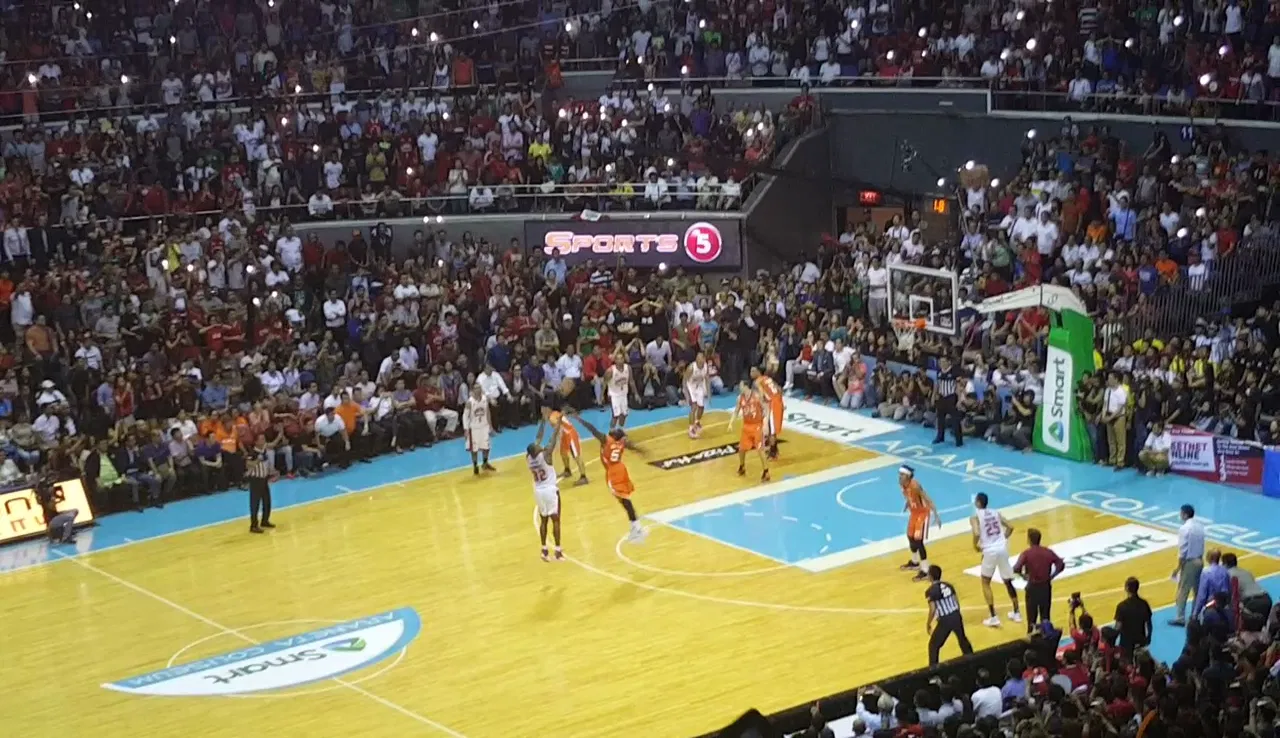
If you watch one thing, make it a Ginebra game — the league's most popular team fills the Smart Araneta Coliseum like no one else. And keep an eye on this season's experiments: the group-stage format and the Macau guest team show a 50-year-old league still tinkering, after last year's version accidentally placed both group winners on the same side of the playoff bracket.
The PBA is not an NBA imitation. It is a distinctly Filipino format — multiple champions, corporate tribes, a calendar fused to the national team — refined over half a century.